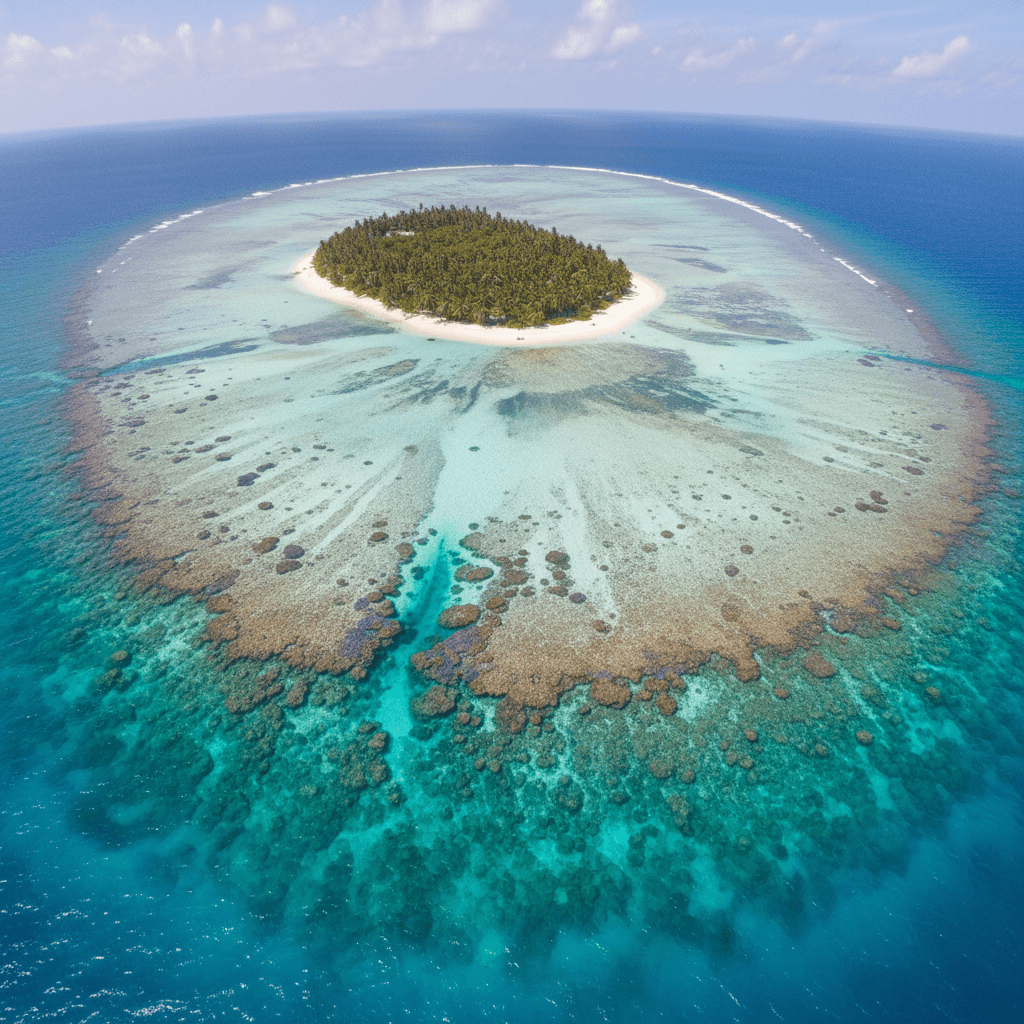
75% of Maldivian Coral Lost in 2016: New 19-Year Study Maps Reef Decline and Resilience
A comprehensive site-specific analysis spanning nearly two decades reveals which reef systems have recovered and which face permanent decline, providing critical data for targeted conservation efforts.
Mariyam Shifa
A comprehensive 19-year study of Maldivian coral reefs published in the journal Coral Reefs has quantified the catastrophic impact of the 2016 mass bleaching event, confirming that approximately 75% of live coral cover was lost across surveyed sites during that single episode. The study, conducted by researchers from the Maldives Marine Research Institute and the Australian Institute of Marine Science, tracked 86 permanent monitoring stations from 2005 to 2024.
The data reveals a highly uneven pattern of recovery. Reefs on the eastern sides of atolls, which benefit from stronger current flow and cooler upwelling water, have recovered to approximately 45% of their pre-2016 coral cover. By contrast, sheltered lagoon reefs and those near populated islands showed recovery rates of just 12 to 18%, with many sites now dominated by macroalgae rather than coral — a state that marine ecologists describe as a 'phase shift' that may be extremely difficult to reverse.
The study identified several factors that correlate with resilience and recovery. Reefs with higher initial species diversity, particularly those hosting robust Porites coral colonies, showed significantly faster recovery rates. Proximity to marine protected areas also proved beneficial, with reefs within 5 kilometres of enforced no-take zones recovering 2.3 times faster than unprotected sites.
The findings have immediate policy implications for the Maldives Environmental Protection Agency, which is currently revising its National Coral Reef Framework. The study's authors recommend prioritising protection for the 23 reef sites identified as 'recovery hotspots' while redirecting restoration resources away from sites that show signs of permanent phase shift. The next major bleaching event, which NOAA's Coral Reef Watch programme projects could occur as early as 2027, will test whether the resilience patterns identified in the study hold under repeated thermal stress.
Mariyam Shifa
Environment Editor
Marine biologist turned journalist.